



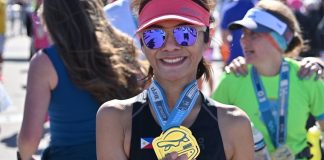
Janina San Miguel - Bb. Pilipinas 2008
March 9th, 2008They say that fitness is a balance between Mind & Body, but GOSH! this is leaning it too far to one side! I wonder what will happen to the Philippines when we send her to compete for Ms. World 2008!
Wacky Fitness Machine
March 5th, 2008
Spending too much time in front of the PC? Is your workout suffering? With Springflex you can now do your workout directly in front of your PC!! –> Skymall
I’m posting this because i find it hilarious! but seriously!! Is anyone going to purchase this machine??
Do you need a Personal Trainer?
March 2nd, 2008
A personal trainer is not for everyone, but having one do have its benefits.
Some reasons on when to consider getting yourself a personal trainer:
If you are a Gym Newbie
If you are new in working out, a personal trainer is the ultimate coach to get you started in the right direction to fitness. A lot of gym newbies quit in the first few months because they are not introduced on how to be effective and efficient in their workouts. A personal trainer can also provide you the confidence and knowledge you need to decide what is right for you later on.
If you need motivation
Half the battle of fitness is just showing up in the gym, an effective personal trainer can make sure you do and makes sure that you maintain to be motivated by doing several variations of workouts compared to doing a consistent routinized exercise program.
If you value safety
A personal trainer watches your form and provide objective feedback about your limits and strengths. Most of us tend to ignore some of the subtle signals our body provides. We either push through pain or give up too soon. Because a personal trainer can watch what you are doing while you are doing it, they can help push you or slow you down as necessary.
If you have a goal
Loose weight, Gain mass, Improve form or simply stay healthy, you need not be alone, a personal trainer can make sure you are doing the right workout and exercise aligned to your goal.
Fat Burning Zone - Truth or Lie?
February 27th, 2008
Ever heard of the “Fat Burning Zone” where you need to do cardiovascular exercise and need to maintain your heart at a specific rate to burn more fat?
I’ve done some research and this is so far what i have found.
Let’s start with the basics:
“A calorie is a unit of measurement for energy. In most fields, it has been replaced by the joule, the SI unit of energy. However, the kilocalorie or calorie remains in common use for the amount of food energy. The calorie was first defined by Professor Nicolas Clément in 1824 as a kilogram-calorie and this definition entered French and English dictionaries between 1842 and 1867.” - wikipedia
The 3 basic source of energy our body needs are carbohydrate, protein and fat.
Now here is the concept. When at rest people normally burn a small amount of calories, and at this state most of the calorie burned are from fat (let’s say 70/30). But when our body shifts from rest to active mode, we start to burn a larger amount of calorie and at the same time our body switches to a fast burning energy source (carbs), which let’s say would give you a ratio of (50/50) burn rate.
Now here comes the mis-conception, don’t train too hard so that you can maintain a good healthy ratio of fat burning rate, because if you do you would be burning more carbohydrates than fat. Makes sense?
I guess it does, until you put the calorie burning rate into play. In the calorie burning game it’s linear, the more activity your body does, the greater the amount of calorie you burn (but the ratio of fat/carb changes)
Now lets do a some computation.
| Activity | Calories Burned | Fat % Percentage | Calories from Fat |
| Watching TV for 30 Minutes | 50 | 70 | 35 |
| Jogging for 30 Minutes | 150 | 60 | 90 |
| Sprinting for 30 Minutes | 300 | 40 | 120 |
There is indeed some truth in the fat burning zone, but for me i’d rather stick with the basics, if you want to loose fat try to burn as much calories as you can.
Craving for some Pasta?
February 25th, 2008
Pomodoro Pasta
by: Pamcy Yu
Here’s a healthy treat for the pasta lover.
Ingredients:
250 g Angel Hair Pasta, undercook by about 1-2 minutes
¼ cup Extra-virgin Olive Oil (This pasta dish is olive oil-based; thus, the large quantity.)
1 whole garlic, roughly chopped
5 medium tomatoes or 8 small ones, chopped
1 small can sliced button mushrooms
½ cup sliced black olives
½ cup Italian Style Spaghetti Sauce
Salt and Pepper
Pour olive oil in a pan and sauté garlic until aromatic, but not brown.
Add the tomatoes and continue cooking until half-cooked (we want to keep the crunchy texture of the tomatoes), then add the mushrooms and olives.Toss in the cooked pasta. Add the spaghetti sauce (this is just for color) and combine everything well.
Season with salt and pepper and serve with grated parmesan cheese or queso de bola.
How to Get a Good Night’s Sleep
February 24th, 2008Five Basic Strategies
1. Never oversleep
Never oversleep because of a poor night’s sleep. This is the most crucial rule. Get up at about the same time every day, especially on the morning after you’ve lost sleep. Sleeping late for just a couple of days can reset your body clock to a different cycle — you’ll be getting sleepy later and waking up later.
2. Set your body clock
Light helps restart your body clock to its active daytime phase. So when you get up, go outside and get some sunlight. Or if that’s difficult, turn on all the lights in your room.
Then walk around for a few minutes. The calves of your legs act as pumps and get blood circulating, carrying more oxygen to your brain to help get you going.
3. Exercise
Keep physically active during the day. This is especially important the day after a bad night’s sleep. When you sleep less, you should be more active during the day. Being less active is one of the worst things an insomniac can do.
Strenuous exercise (brisk walking, swimming, jogging, squash, etc.) in late afternoon seems to promote more restful sleep. Also, insomniacs tend to be too inactive a couple of hours before bed. Do some gentle exercise. A stretching routine has helped many people.
4. Don’t nap
Do not take any naps the day after you’ve lost sleep. When you feel sleepy, get up and do something. Walk, make the bed, or do your errands.
While studying, get up regularly (every 30 minutes, or more often if necessary) to walk around your room. Do a gentle stretch. That will increase the flow of oxygen to your brain and help you to be more alert.
5. Set a bedtime schedule using these two steps:
First, try to go to bed at about the same time every night. Be regular. Most people get hungry at 7 a.m., noon, and 6 p.m. because they’ve eaten at those times for years. Going to bed at about the same time every night can make sleep as regular as hunger.
Second, go to bed later when you are having trouble sleeping. If you’re only getting five hours of sleep a night during your insomnia period, don’t go to bed until just five hours before your wake-up time. For instance, if you’ve been waking up at 7 a.m., don’t go to bed until 2 a.m. No naps! Make the time you spend in bed sleep time. Still some insomnia? Go to bed proportionately later. Then, as your time in bed becomes good sleep time, move your going-to-bed time back 15 to 30 minutes a night and do that for a week or so.
This is the opposite of what we want to do: we want to go to bed earlier to make up the lost sleep. Learn to do what many sleep laboratories teach — go to bed later the night after losing sleep.
lifted from: http://www.k-state.edu/counseling/topics/life/sleep.html
Welcome to Pinoy Fitness
February 24th, 2008Hi All,
First of all thanks for visiting the site! I’ll be posting stuff about personal fitness, health sports and a lot more.