


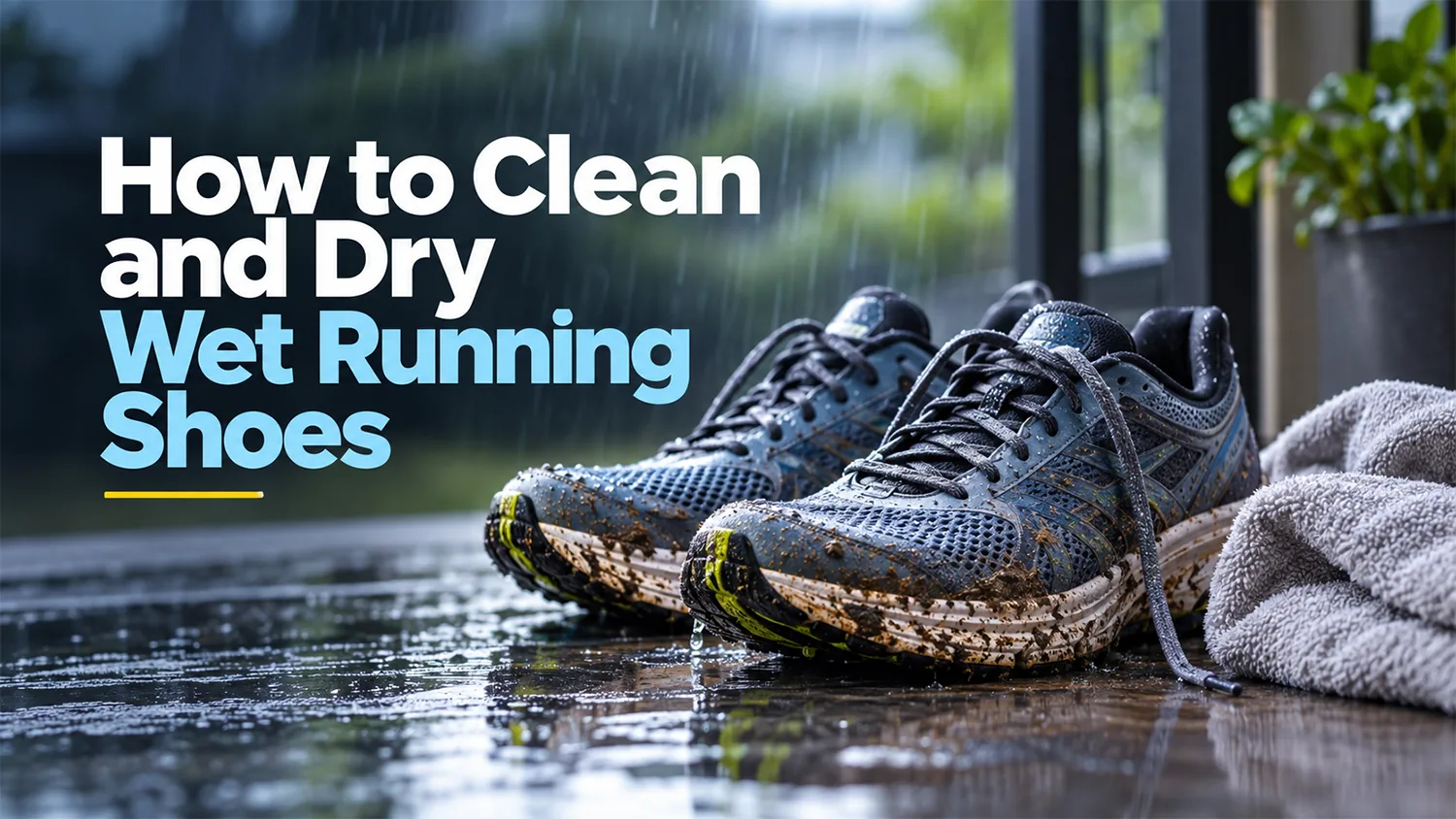
How to Clean and Dry Wet Running Shoes
Rainy runs can be refreshing, but wet and muddy running shoes need proper care. Today’s running shoes use lightweight mesh or knit uppers, engineered foam, bonded components, and—in some models—waterproof membranes or performance plates. Soaking, machine-washing, or exposing them to high heat can damage these materials.
Check your running shoes after every run. If they are dry and only slightly dusty, simply brush off the loose dirt. If they are wet, muddy, or gritty, clean the affected areas and begin drying them as soon as possible. A full wash after every run is not necessary.
If Your Running Shoes Are Wet but Not Muddy
If your shoes are not muddy or heavily soiled, rinse the dirty areas under a gentle stream of clean, cool or lukewarm water. Avoid saturating the entire shoe unnecessarily.

Remove any detachable sockliners or insoles, loosen the laces, and blot away excess water with a dry towel. Stuff the shoes loosely with clean white paper towels or a dry cloth, then leave them to air-dry completely.
If your shoes only became wet from clean rainwater and have no visible dirt, you can skip rinsing them. Just remove the sockliners, blot the shoes, and begin the drying process.
How to Clean Muddy Running Shoes
- Remove the laces and detachable sockliners. This gives you better access to the upper and allows every part to dry more thoroughly. Do not force out sockliners that are glued in place.
- Remove loose mud and debris. Let thick mud dry enough to brush away without spreading it deeper into the fabric. Use a soft-bristled brush to clear dirt, stones, and debris from the outsole grooves or trail-shoe lugs.
- Prepare a mild cleaning solution. Mix a small amount of mild liquid soap, mild laundry detergent, or running-shoe cleaner with cool or lukewarm water. Avoid bleach, alcohol, strong stain removers, and harsh household cleaners.
- Clean the outsole. Use a soft brush and the cleaning solution to remove dirt from the rubber outsole. Pay particular attention to packed mud in the tread, as it can reduce traction.
- Clean the upper gently. Use a damp cloth, sponge, or very soft brush on the mesh or knit upper. Work gently to avoid snagging, stretching, or damaging lightweight performance materials.
- Remove the soap. Wipe the shoes with a clean, damp cloth or lightly rinse only the cleaned areas. Do not submerge or soak the entire shoe.
- Blot and reshape. Press a dry towel against the shoes to absorb excess moisture. Loosely stuff them with clean white paper towels, plain paper, or dry cloths to help maintain their shape. Replace the stuffing when it becomes saturated. Avoid newspaper because its ink may transfer to the lining.
- Air-dry completely. Place the shoes and sockliners in a shaded, well-ventilated area. A fan can help circulate air and speed up drying. Do not use a washing machine, tumble dryer, hair dryer, heater, radiator, or prolonged direct sunlight.
Wait until the shoes and sockliners are completely dry before running in them again. Depending on the materials and humidity, drying may take more than a day.
Waterproof Running Shoes
For running shoes with a waterproof and breathable membrane, follow the manufacturer’s care instructions. Use a cleaner approved for waterproof footwear and avoid products that can clog or damage the membrane. If necessary, renew the shoe’s water-repellent treatment using a compatible product.
Cleaning Sockliners and Laces
Wash the laces separately with mild soap and water, then rinse and air-dry them.
Gently brush or wipe removable sockliners with mild soapy water. Avoid soaking them because excess water can affect their foam and shape. Let them dry completely before returning them to the shoes. Replace sockliners that remain damaged or develop a persistent odor after cleaning.
If Your Running Shoes Were Exposed to Floodwater
Floodwater may contain sewage, chemicals, sharp debris, and harmful germs. A quick rinse is not enough for running shoes that have been submerged in flood or sewage water.
Handle contaminated shoes carefully, wash your hands afterward, and follow the running-shoe manufacturer’s cleaning guidance. Do not apply bleach, alcohol, or another disinfectant unless the manufacturer confirms that it is safe for the shoe’s materials.
If the shoes cannot be thoroughly cleaned and dried, or if they develop mold or a persistent odor, replacing them may be the safest option.
Prompt care after every wet or dirty run helps preserve traction, control odors, and keep your running shoes ready for your next workout.