


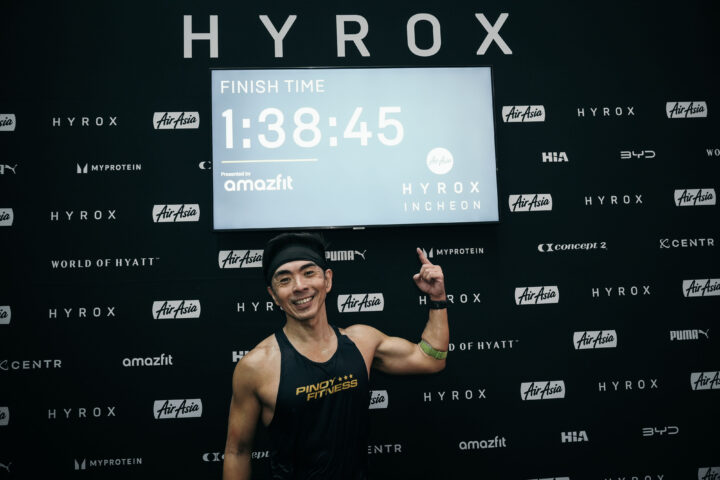
My HYROX Side Quest
After finishing the Tokyo Marathon, I thought I had a solid fitness base. As a runner, endurance was never really the problem. I was used to long runs, pacing, and pushing through discomfort.
So when I signed up for my first HYROX race, I honestly thought it would be a fun side quest.
But after my first HYROX simulation, reality hit hard. The running part felt familiar, but the stations were a different story. The sled push, sled pull, lunges, wall balls, and other functional movements exposed weaknesses I didn’t even know I had.
My glutes, quads, hamstrings, and even my grip strength were suddenly part of the conversation. It was humbling.

That’s when I realized HYROX is not just “running with workouts.” It is a serious fitness race that requires strength, technique, pacing, and proper preparation. With the help of Coach Louie and the Lokal Active community, I trained for around eight weeks and learned a lot from the experience.
So if you’re a runner thinking of trying HYROX, here are some tips that might help you prepare better for your first race.

Tip 1: Your Running Endurance Is an Advantage, But It Is Not Enough
As runners, we already have a good aerobic base. That’s a big advantage because HYROX includes a total of 8K running, broken into 1K segments between workout stations.
This means you already know how to pace, manage effort, and stay mentally strong when things get uncomfortable.
But HYROX will challenge your body in a different way. The stations require strength, power, coordination, and muscular endurance. You will need to push, pull, carry, jump, lunge, row, ski, and throw — all while trying to keep your breathing under control.
So yes, your running background helps. But don’t rely on running alone.

Tip 2: Give Yourself Time to Build Strength
One of my biggest learnings is that runners should give themselves enough time to prepare.
Ideally, allow at least two to three months to build the strength needed for HYROX. Your glutes, hamstrings, quads, core, shoulders, and grip will all be tested.
As runners, we’re used to repetitive forward motion. HYROX adds load, resistance, and movement patterns that many runners may not train regularly.
The earlier you start strength training, the better your body can adapt. Don’t wait until race week to discover that the sled push has no mercy. That thing collects souls.

Tip 3: Learn the Technique for Each Station
HYROX is not just about being strong. Technique matters a lot.
Every station has its own strategy. The sled push, sled pull, burpee broad jumps, farmers carry, sandbag lunges, rowing, SkiErg, and wall balls all require proper form and energy management.
This is where having a coach can really help.
A coach can teach you how to move efficiently, conserve energy, and avoid unnecessary strain. Sometimes the difference between suffering badly and suffering slightly less badly is technique. Still suffering, but at least with form.

Tip 4: Know Your Weak Stations Early
One of the best things you can do before race day is to test yourself through fundamentals training or a simulation.
This helps you identify which stations are your strengths and which ones need work. For me, it was eye-opening. Some stations felt manageable, while others immediately showed me where I needed to improve.
Personally, the stations I was most scared of were the sled push and wall balls. The sled push felt intimidating because it demanded raw power from the legs, especially the glutes and quads. Wall balls, on the other hand, looked simple from the outside, but once fatigue sets in, every rep feels heavier than the last. Parang every throw may kasamang life choices.
Once you know your weak points, you can train smarter. Instead of randomly doing workouts, you can focus on the areas that will make the biggest difference on race day. The earlier you face those scary stations in training, the less scary they become when it’s finally race day.
Tip 5: Balance HYROX Training With Running
If you’re a runner, you don’t need to abandon running to train for HYROX. In fact, your running fitness is one of your biggest weapons.
The key is balance.
You need a program that allows you to maintain your running base while gradually adding strength and functional training. A good 6- to 8-week structured plan can help you prepare without burning out or overloading your body.
Too much running and not enough strength? The stations will punish you.
Too much strength and no running? The 1K intervals will feel longer than they should.
The goal is to become strong enough for the stations while staying efficient on the runs.
View this post on Instagram
Final Thoughts: From Runner to HYROX Finisher
HYROX gave me a whole new respect for fitness.
As a runner, I entered thinking it was just another challenge. But I quickly learned that HYROX is a sport of its own. It demands strength, endurance, strategy, and humility.
The good news is that runners already have a strong foundation. We know how to pace. We know how to endure. We know how to keep moving even when things get hard.
Now, we just need to add strength, technique, and proper preparation.
For now, Filipinos who want to experience an official HYROX race still have to fly out of the Philippines to join one. But there are rumors that HYROX might eventually come to the country sometime in 2027. So for those who want to try it, or eventually join one when it becomes available here, this might be the perfect time to start working on it.
So if you’re a runner thinking about trying HYROX, go for it — but respect the process. Train properly, give yourself enough time, work with a coach if you can, and enjoy the journey.
Your first HYROX might start as a side quest, but don’t be surprised if it becomes one of your main events.